GoboPhone for businesses

Turn every call into a lead

Rinks, arcades, trampoline parks, and any counter where the phone is how business arrives. Desk phones at the front, the office and the party room, all managed from one screen.

Ten handsets is one plan, not ten seats. Everyone else on the market bills per user; that difference is roughly three to five times by the time you have a phone in every room.

The problem with a busy counter

One conversation, not three places to look

A parent calls about a birthday party on Tuesday, leaves a voicemail. On Wednesday they text the same number. On Thursday they call again and speak to somebody different, who has no idea any of it happened.

GoboPhone threads texts, voicemails and call notes together by contact, so that is one conversation with three entries, sitting in front of whoever picks up next. Search reads the contents of messages, so “birthday” finds everyone who mentioned one. Name a contact once and the name follows them everywhere, including onto the screen of the handset when they call back.

Call notes are typed by the person who took the call. There is no call recording, and there is not going to be — California requires all-party consent, and a rink cannot ask that of every caller.

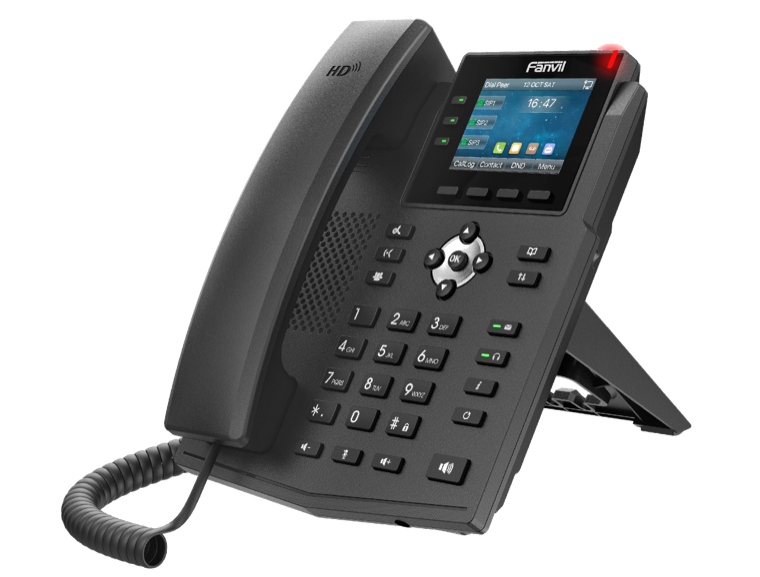
A black Fanvil desk phone with a corded handset, a color screen showing the time and its line labels, four soft keys beneath the screen, a navigation pad, a full numeric keypad, and a fold-out desk stand.
A Fanvil desk phone of the kind that goes on a counter, where staff need to see who is calling before they answer.
Staff and handsets

We manage your IP phones

This is the part that decides whether a phone system survives contact with a seasonal staff roster.

Phones configure themselves

Plug a supported Fanvil into power and Ethernet and it asks the network for its own configuration. Ringtone, quiet hours, the name on the screen and your brand color all arrive from the dashboard.

No admin password to circulate, no web interface for anyone to learn, no cable to a laptop. A handset that dies on a Friday is replaced by plugging in the new one.

Set it once for the whole venue

A venue sets its ringtone, quiet hours and screen branding once, and every phone in the building follows. A single phone can differ — the one in the office that should not ring during a party — but only because somebody deliberately overrode it.

So “set it once” stays true, which is the only way a setting survives a year of staff turnover.

More than one location

A chain configures a venue at a time. Each location keeps its own numbers, its own quiet hours and its own branding, and you manage all of them from one login rather than one dashboard per building.

What it costs

Flat rate, not per seat

This is the whole commercial argument, and it is worth stating plainly: every comparable phone system charges you for each person who uses it. We charge for the building.

Ten handsets at one venue, billed month to month. Our figure includes the ten voip.ms lines at about $2.60 each, plus usage, which runs less than a penny a minute.
ServiceHow it billsTen handsets
GoboPhone Pro$35 flat, per venueAbout $61
Ooma Office$19.95 per user$199.50 plus taxes
Nextiva$23 per user$230
RingCentral$30 per user$300

List prices from each company’s own site, August 2026, at month-to-month rates. The full comparison, including what they do better than us.

The plans

Pick by phones and venues

Every plan includes the approved-caller list, emergency calling and quiet hours. Paid tiers buy scale, never safety.

PlanPhones and numbersVenuesPer month
ProTen of eachOne$35
EnterpriseUnlimitedAs many as you buy$100, plus $40 per additional venue

A two-venue operation on Enterprise is $140 a month, not $200 — the $100 covers the first venue and each one after it is $40.

Being straight with you

What we are not

We are not a phone company. GoboPhone cannot place a call. Your numbers live on your own voip.ms account, they carry the traffic, and they bill you directly at around $2.60 a line plus usage, which runs less than a penny a minute. We manage the account and the phones. That is cheaper than a bundled provider and it means the numbers are yours — but it is a second account to set up, and if you would rather have one bill, that is a real reason to buy elsewhere.

We are not a contact center. No auto-attendant trees, no queue analytics, no CRM pipeline integration today. ROLLER integration is next, so a caller’s account and bookings can be on screen before anyone picks up. If you need calls landing in Salesforce this quarter, buy one of theirs.

We do not sell handsets. You buy supported Fanvil phones from any reseller at whatever the market charges. We earn nothing on the hardware and have no reason to talk you into more of it.


Try it on the free plan first

One number and one handset costs nothing, which is enough to put a phone on the counter and see how the provisioning and the shared inbox actually feel before you wire the building.